

- Governance
- Service Management
- Atlassian Cloud
- Jira Service Management
- Change Management
- ITSM
- IT Operations
Change Management in Jira Service Management: A Guide
See how to manage organizational change effectively with Jira Service Management, using proven strategies for lasting adoption across teams

contents
Every organization faces change. New software gets rolled out. Teams get restructured. Processes get redesigned. Systems get migrated. The ambition behind these changes is usually sound. The execution is where things fall apart.
The reason most change initiatives struggle is not a lack of planning. It is a lack of structure around the human side of change. People need time, context, and support to adapt their habits. Without a clear framework for managing that process, even well-designed changes meet resistance, stall during rollout, or get adopted in name only while teams quietly continue doing things the old way.
Change management strategies are the structured approaches organizations use to guide people through transitions successfully. When those strategies are supported by the right tools, the gap between planning a change and actually landing it closes significantly.
Jira Service Management gives IT and operations teams a practical environment for managing change requests, tracking approvals, assigning ownership, and monitoring adoption across the organization. This guide covers seven proven change management strategies and how JSM supports each one.
What Is Change Management
Change management is the discipline of guiding people and organizations through transitions in a way that minimizes disruption, addresses resistance, and increases the likelihood that new processes or technologies actually get adopted rather than worked around.
Good change management recognizes that change is as much about people as it is about processes or tools. A new system can be technically flawless and still fail if the people using it do not understand why it exists, how it affects their work, or what support is available to help them adapt.
Change management strategies create the conditions where change can happen smoothly and be sustained over the long term. They address both the technical requirements of the change and the human factors that determine whether it sticks.
Types of Organizational Change
Different situations call for different approaches. Understanding which type of change you are managing helps you choose the right strategies and set realistic expectations for the people involved.
Transformational change: This involves fundamental shifts in how an organization operates. Major restructuring, cultural overhauls, or complete process redesigns all fall into this category. It is the most intensive type and typically touches every part of the organization.
Transitional change: This focuses on moving from a current state to a defined future state, such as implementing new software, migrating to a new ITSM platform, or reorganizing departments. There is a clear before and after, with the transition period in between. JSM migrations from platforms like ServiceNow or Zendesk are a common example of this type.
Developmental change: This involves improving existing processes or capabilities without fundamentally changing how things work. Refining workflows, enhancing team skills, or optimizing current JSM configurations fall into this category.
Each type requires different levels of planning and stakeholder support. Knowing which type you are managing is the first step toward choosing the right approach.
7 Change Management Strategies and How JSM Supports Them
1. Develop a Detailed Communication Plan
Clear communication is the foundation of successful change. People need to understand not just what is changing but why it matters and how it affects their day-to-day work. Without that context, even reasonable changes feel threatening or arbitrary.
A strong communication plan outlines what is changing, why it matters, and how it affects employees at different levels. It uses multiple channels to reach people where they are, including email updates, team meetings, and direct conversations with managers. Repetition matters. People need to hear important messages several times before they fully register, especially when they are busy with regular work.
How JSM supports this: Jira Service Management provides a central place to document, track, and communicate change requests throughout their lifecycle. Change records in JSM can include the full rationale for a change, the impact assessment, the rollout plan, and the communication timeline. Stakeholders can be notified automatically at key stages, and all communication activity is logged against the change record so nothing gets lost in email threads.
2. Identify and Engage Stakeholders Early
Successful change initiatives always begin with stakeholder mapping. You need to identify who will be impacted by the change and how, including not just the teams directly affected but also adjacent teams, leadership, and anyone whose work connects to the change.
Involving stakeholders in planning and decision-making from the start increases their likelihood of supporting the outcome. Early engagement also helps surface potential resistance points before implementation begins, when they are much easier to address.
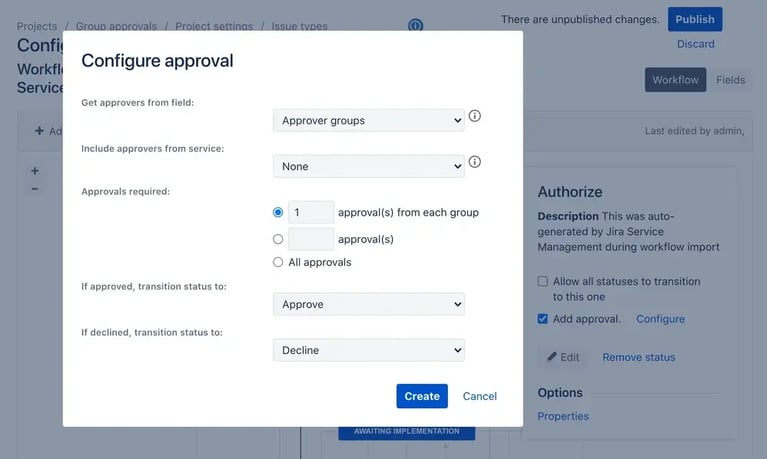
How JSM supports this: JSM's approval workflows allow change managers to define exactly which stakeholders need to review and approve a change before it proceeds. Approvers are notified automatically and can review the full change record before making a decision. This creates a structured, auditable process for stakeholder engagement that replaces the informal, often inconsistent approval processes many organizations rely on.
3. Provide Role-Specific Training and Skill Development
Different roles interact with changes in different ways, so training needs to reflect those differences. A team lead needs to understand a change differently from an individual contributor. A JSM administrator needs different guidance than an end user accessing the service portal for the first time.
Training should offer multiple formats for different learning styles, including live workshops, recorded walkthroughs, written guides, and hands-on practice. Resources should be easy to find when people need them, not just during scheduled training sessions.
How JSM supports this: Training materials, recorded walkthroughs, and reference documentation can be linked directly to JSM change records in Confluence, keeping all context in one place. JSM service portals can also be configured with self-service knowledge base articles that give end users answers to common questions without needing to raise a support request.
4. Align Leadership to Reinforce New Behaviors
Leaders set the tone for how seriously a change is taken. When managers and executives visibly adopt new processes and communicate their importance consistently, it signals to everyone else that the change is real and here to stay. When leaders pay lip service to a change while continuing old behaviors, the organization follows their lead.
Leaders do not need to be technical experts in every detail of the change. They need to show visible commitment, model the behaviors they want to see, and recognize people who embrace new ways of working.
How JSM supports this: JSM gives leadership real-time visibility into change progress through dashboards and reporting. When leaders can see adoption metrics, open change requests, and SLA performance in one place, they are better positioned to ask the right questions, remove blockers, and reinforce the behaviors that drive adoption. Reporting in JSM also gives leaders the data they need to communicate progress credibly to the broader organization.
5. Empower Change Champions Within Teams
Change champions are influential employees who understand the change and can advocate for it among their peers. The most effective champions are respected individual contributors who others naturally turn to for advice, not necessarily managers. Peer-to-peer support often feels less intimidating than guidance from leadership.
Champions should be given the information and resources they need to answer questions and help colleagues navigate the transition. They also serve as an informal feedback channel, surfacing concerns that do not always make it through official channels.
How JSM supports this: In JSM, change champions can be assigned specific roles within the change workflow, giving them visibility into upcoming changes, the ability to track adoption within their teams, and a clear path for escalating concerns. JSM's queues and assignment features make it easy to route questions and feedback to the right people, including champions, without creating extra overhead.
6. Monitor Adoption and Track Progress With Measurable KPIs
Defining specific metrics before a change rolls out is essential for understanding whether it is working. Useful metrics might include usage rates of new systems, process completion times, error rates, SLA performance, or employee satisfaction scores. Both leading indicators like training completion and lagging indicators like business outcomes should be tracked to get a complete picture.
When metrics reveal problem areas, the right response is to adjust the approach rather than repeat the same tactics more loudly. Regular feedback loops keep teams informed of progress and help maintain momentum throughout the change.
How JSM supports this: JSM's built-in reporting and dashboards give change managers a live view of how a change is progressing. Teams can track how many change requests have been completed, how long each stage of the process is taking, whether SLAs are being met, and where bottlenecks are forming. This data informs real-time adjustments and gives stakeholders the visibility they need to stay confident in the process.
7. Implement a Phased Rollout With Iterative Improvements
Trying to change everything at once overwhelms people and increases the risk of failure. Phased rollouts introduce changes in stages, starting with a pilot group before expanding to the broader organization. Early adopters test the new system in a lower-risk environment, identify issues, and help refine the approach before it scales.
Phased approaches give teams time to learn and adapt at each stage. They also create momentum. Early wins from successful pilot deployments build confidence and make it easier to bring skeptics along in later phases.
How JSM supports this: JSM supports phased change rollouts through its change management workflow, which can include pilot approval stages, testing gates, and defined rollback procedures before full deployment. Change requests can be scoped to specific teams or environments in the early phases, with the workflow expanding as each stage is validated. This gives change managers a structured, controlled path from pilot to full rollout without losing visibility or accountability at any stage.
Change Management Frameworks to Know
Several established frameworks provide additional structure for managing organizational change. Each offers a different lens for understanding where people are in the change process and what they need to move forward.
ADKAR Model: This focuses on individual change through five stages: Awareness of the need for change, Desire to support it, Knowledge of how to change, Ability to implement new skills, and Reinforcement to sustain change. It is particularly useful for identifying where individuals are getting stuck in the adoption process.
Kotter's 8-Step Change Model: This emphasizes creating urgency, building coalitions, developing a clear vision, communicating for buy-in, empowering action, generating short-term wins, consolidating gains, and anchoring new approaches in culture. It is well suited for large-scale transformational change.
Lewin's Change Model: This breaks change into three stages: Unfreeze, which involves preparing people for change; Change, which covers implementing new processes; and Refreeze, which focuses on solidifying new approaches. Its simplicity makes it a good starting point for teams new to formal change management.
Prosci Methodology : This combines individual and organizational change management, focusing on preparing, managing, and reinforcing change. It includes tools for assessing change impact and building executive sponsorship across the organization.
The right framework depends on the type and scale of change you are managing. For many IT and operations teams, ADKAR or Prosci works well alongside JSM because they focus on individual adoption, which is where most change initiatives succeed or fail.
Why JSM Is the Right Platform for Change Management
Jira Service Management is purpose-built for IT and operations workflows, which makes it a natural fit for managing organizational change. It centralizes change requests, approval workflows, task assignments, and reporting in one place, replacing the scattered combination of email, spreadsheets, and manual tracking that most teams rely on.
JSM's change management capabilities include structured change request templates that capture impact assessments, risk levels, rollout plans, and rollback procedures. Approval workflows ensure the right stakeholders review every change before it proceeds. Automation handles notifications, escalations, and status updates so nothing gets missed. Reporting gives change managers and leadership real-time visibility into what is happening and where.
For organizations migrating from other ITSM platforms, JSM also provides a clean foundation for standardizing change management processes that may have grown inconsistent over time across different tools and teams.
How Atlas Bench Can Help
Atlas Bench is an Atlassian Platinum Solution Partner and an Atlassian Service Management Specialized Partner. We help organizations design and implement Jira Service Management across IT, Operations, and DevOps teams, covering everything from change management workflow configuration and SLA setup to multi-vendor migrations. We have moved teams off ServiceNow, Zendesk, PagerDuty, and legacy on-premise systems, and we specialize in connecting JSM to the broader Atlassian ecosystem so your tools work as a connected whole.
Whether you are implementing JSM change management for the first time, standardizing inconsistent processes across teams, or migrating from another platform, our Certified Atlassian Experts bring the experience to get it done right and the depth to make it last.
Atlassian continues to invest in JSM's change management capabilities, with new features and AI-powered tools rolling out on an ongoing basis. Getting the right foundation in place now means your team is positioned to take full advantage of every improvement as it arrives.
Read next.
New Work Types in Jira Business Spaces
Learn how Jira's new work type hierarchy in business spaces gives non-technical teams better structure, and control over their work.
April 16, 2026Web Search in Rovo Agents: What It Is and How to Use It
See how web search in Rovo Agents works, how to set it up, and how teams are using it to bring live web context into their workflows.
April 13, 2026Real-Time Use Cases of Rovo AI in Jira and JSM
See how Atlassian Rovo is changing the way teams work in Jira and JSM in real time.
The blog, weekly.
One email a week with what we published. No drip sequence, and you can leave in a click.