

IT Operations with Jira Service Management Guide
How Jira Service Management helps IT teams handle requests, incidents, and major incidents, from the service portal to escalation for major incidents.

In this blog, we explore how Jira Service Management empowers IT teams to handle requests, incidents, and major incidents efficiently. The discussion covers the service portal, which enhances customer experience, incident management tools that help IT teams respond proactively, and major incident workflows with smart escalation, collaboration, and stakeholder communication. The goal is to showcase how Jira Service Management streamlines IT operations and helps organizations improve service efficiency.
Service Portal and Request Management
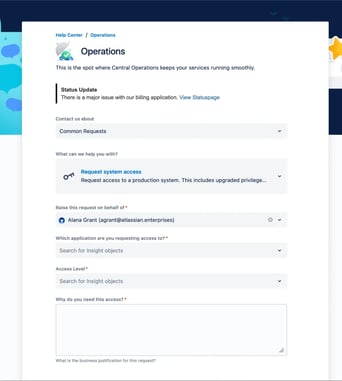
The service portal in Jira Service Management is designed to be intuitive and knowledge-centric, allowing users to find information quickly and self-solve issues, reducing dependency on support teams.
-
Customizable portal: Organizations can configure the portal to align with their branding and operational structure.
-
Easy categorization: Grouping related requests and knowledge articles enhances navigation and speeds up issue resolution.
-
Dynamic forms and automation: Users are guided through request submission with relevant questions and validation rules, reducing incomplete or incorrect submissions.
Incident Reporting and Management
Managing incidents efficiently is critical for IT teams, and Jira Service Management offers tools to proactively detect, categorize, and resolve incidents before they escalate.
-
Proactive incident reporting: Users can manually set impact levels, or the system can auto-derive priority based on the affected service.
-
Automated triage: Contextual information is automatically surfaced to agents, reducing investigation time.
-
Knowledge base integration: Relevant articles are suggested based on issue type, enabling faster resolution.
Collaboration and Smart Escalation
Effective incident response requires real-time collaboration across IT, development, and business teams. Jira Service Management ensures that teams work seamlessly together without disrupting workflows.
-
Cross-team collaboration: IT and development teams can communicate within Jira, reducing time lost in tool-switching.
-
Smart escalation workflows: Predefined escalation rules and on-call schedules ensure the right responders are notified.
-
War rooms for major incidents: Built-in video conferencing and chat integrations with Slack or Microsoft Teams facilitate rapid decision-making.
Post-Incident Analysis and Continuous Improvement
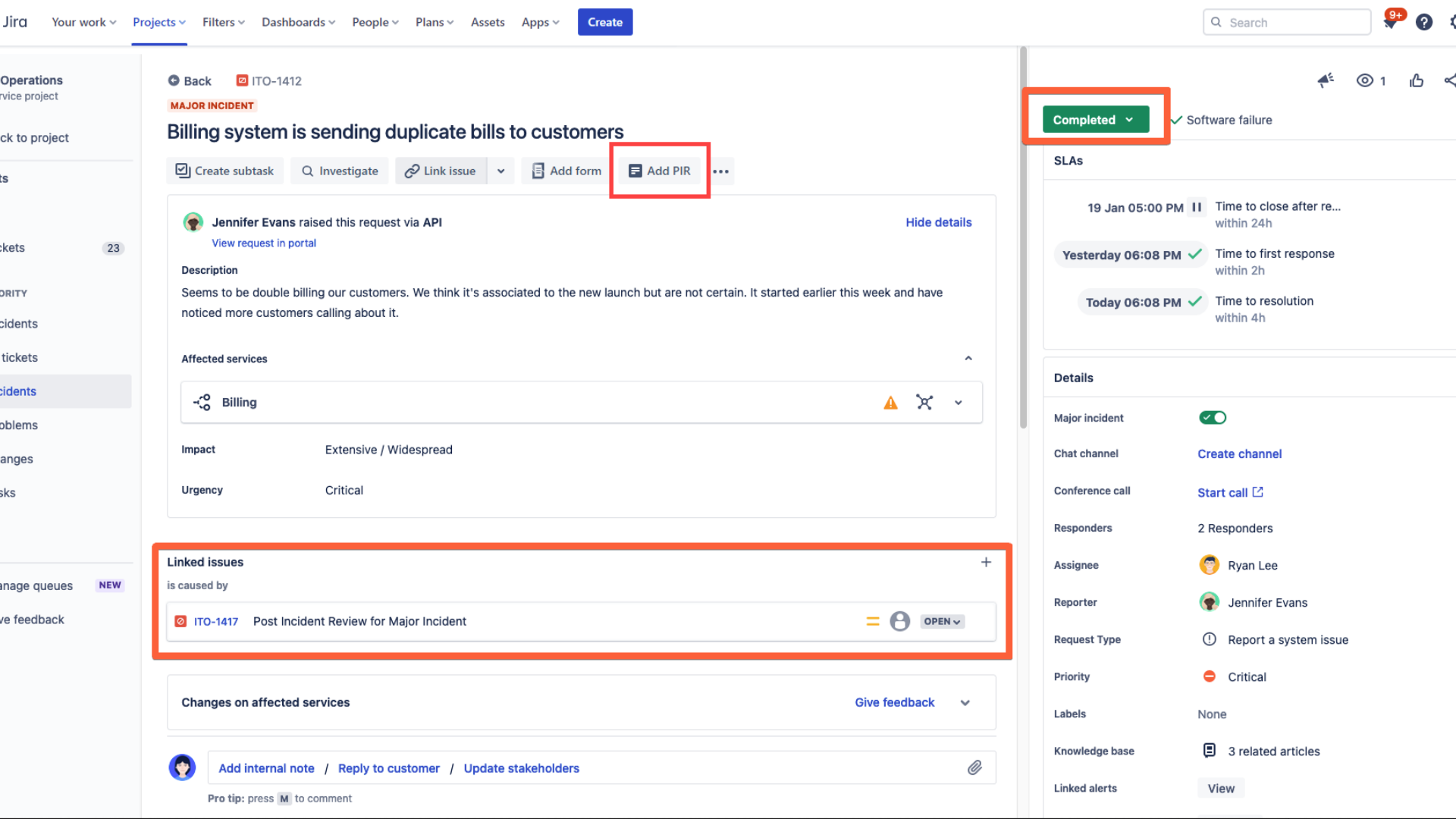
After an incident is resolved, post-incident reviews help teams improve future responses by identifying weaknesses and areas for optimization.
-
Incident timelines: All actions and updates are logged for full transparency.
-
Root cause analysis: Visibility into recent deployments and changes helps identify potential causes.
-
Structured postmortems: Templated post-implementation reviews ensure lessons are captured and applied.
Conclusion
Jira Service Management transforms IT operations by streamlining service requests, automating incident management, and fostering cross-team collaboration. Its proactive escalation and post-incident review processes ensure continuous service improvement.
Read next.
What Is Rovo Agent Governance in Atlassian Cloud
Learn how Rovo agent governance works in Atlassian Cloud, from permission models to admin controls, and configure AI agents securely.
April 16, 2026Change Management in Jira Service Management: A Guide
See how to manage organizational change effectively with Jira Service Management, using proven strategies for lasting adoption across teams
April 16, 2026New Work Types in Jira Business Spaces
Learn how Jira's new work type hierarchy in business spaces gives non-technical teams better structure, and control over their work.
April 16, 2026Web Search in Rovo Agents: What It Is and How to Use It
See how web search in Rovo Agents works, how to set it up, and how teams are using it to bring live web context into their workflows.
The blog, weekly.
One email a week with what we published. No drip sequence, and you can leave in a click.