

- Agents
- Atlassian Cloud
- Atlassian System of Work
- Teamwork Graph
- Atlassian Best Practices
- Enterprise Productivity
Atlassian System of Work Explained
Discover how Atlassian’s System of Work connects teams, tools, and goals to drive business success.

In today’s fast-evolving workplace, organizations face challenges like AI integration, distributed team productivity, and tool sprawl. Atlassian’s System of Work is designed to address these issues by bringing together teams, tools, and goals into a unified framework. This system helps businesses operate efficiently, align work with shared objectives, and unleash collective knowledge to drive success.
For a deeper dive into this topic, check out our video breakdown explaining how Atlassian’s System of Work optimizes collaboration and productivity.
The Need for a System of Work
Organizations today struggle with various operational inefficiencies, including:
- AI adoption challenges, as many companies want to integrate AI but lack a clear operational strategy.
- Productivity barriers due to distributed and hybrid teams needing streamlined processes.
- Tool and data silos caused by multiple collaboration tools, making it difficult to unify workflows.
According to research, 40% of C-suite executives plan to increase investment in AI, while nearly half of surveyed CEOs identify productivity as a top priority. The System of Work provides a structured approach to overcoming these obstacles, ensuring that technology and business teams can work together seamlessly.
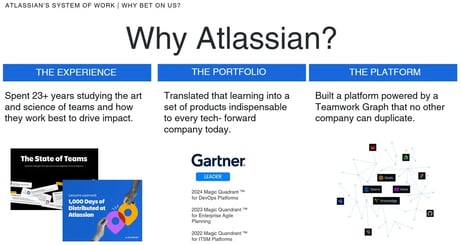
The Three Core Principles of the Atlassian System of Work
Atlassian’s System of Work is built around three fundamental principles that ensure smooth collaboration and high efficiency:
- Align work to goals so teams clearly understand how their work connects to company objectives.
- Plan and track work together to ensure transparency and accountability across teams.
- Unleash collective knowledge by making information easily accessible for continuous learning and cross-team collaboration.
By applying these principles, organizations see improved engagement, faster time to value, and a higher return on investment.
How Teams Benefit from the System of Work
Atlassian’s approach supports various teams across an organization:
- Software development teams can manage sprints, releases, and dependencies while maintaining visibility across projects.
- IT and operations teams can handle incidents, assets, and requests more effectively.
- Marketing and sales teams can streamline campaign planning, content calendars, and customer engagement.
- Leadership and strategy teams gain real-time insights into company-wide progress and can align strategic initiatives.
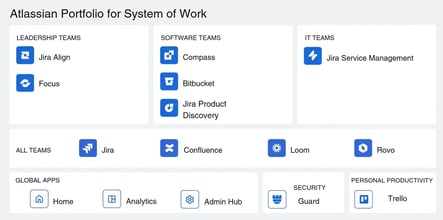
Atlassian products, including Jira, Confluence, and Loom, enable these teams to work within a unified system while maintaining their preferred workflows.
The Power of the Teamwork Graph
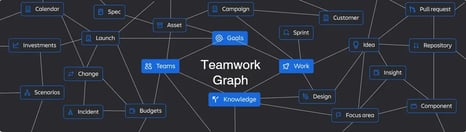
At the core of the Atlassian Cloud Platform is the Teamwork Graph, a unique data layer that connects:
- Teams and their relationships.
- Work items, including projects, issues, and tasks.
- Goals and objectives that align with broader business strategies.
- Shared knowledge, such as documentation, best practices, and historical insights.
This interconnected system allows businesses to break down silos and integrate various tools like Google, Slack, and Figma into a unified workflow. With AI-driven insights, automation, and enhanced search capabilities, the Teamwork Graph transforms the way teams collaborate.
Real-World Impact: Case Studies
Atlassian’s System of Work is already driving success for major organizations:
- Reddit consolidated work management on Atlassian Cloud, saving over $300,000 annually, improving discoverability, and enhancing security.
- Rivian reduced tool costs by 36%, saving 750 hours per person per year through automation.
These case studies highlight the measurable benefits of adopting a unified system for collaboration.
Accelerating Your System of Work on the Cloud
To implement a successful System of Work, companies should start with foundational tools like:
- Jira for aligning work with goals and streamlining project management.
- Confluence for centralizing documentation and fostering knowledge sharing.
- Loom for enhancing asynchronous communication for distributed teams.
- Rovo for supporting AI-driven collaboration and automation.
From there, businesses can expand the system to IT, marketing, sales, and leadership teams, ensuring that all departments work together efficiently.
Wrapping Up
Atlassian’s System of Work provides a structured, scalable approach to collaboration, ensuring that teams stay connected, aligned, and productive. By leveraging Atlassian’s tools and the power of the Teamwork Graph, organizations can break down silos, improve efficiency, and accelerate their digital transformation.
Read next.
Non-Human Identities in Atlassian Cloud: Service Accounts, Tokens, Apps, and Agents
How to govern non-human identities in Atlassian Cloud: service accounts, API tokens, Forge apps, and Rovo agents, each with an owner, scope, and expiry.
October 1, 2026How to Choose an Atlassian Partner for a Jira Cloud Migration
How to choose an Atlassian Solution Partner for a Jira Cloud migration: what to verify, eight questions to ask, red flags, and a shortlist scorecard.
September 30, 2026The Complete Guide to Agent Readiness in Atlassian Cloud
Agent readiness for Atlassian Cloud: the five checks to run before you switch on Rovo agents, from identities and permissions to the off switch.
September 28, 2026How to Review Rovo Agent Access in Jira and Confluence
A step-by-step access review for Rovo agents in Jira and Confluence: who can create them, who can use them, what they can change, and what gets logged.
The blog, weekly.
One email a week with what we published. No drip sequence, and you can leave in a click.